
An opportunity exists to pause, create a space and reboot a social agenda that will deliver guidance to those who need it, support for those in need, reduce anti-social behaviour, quell violence on our streets and mandate statutory authorities pool budgets and work together to achieve a stronger supportive and harmonised society.
With recent statements from senior police officers exposing the real challenges facing policing, from knife crime to county drug lines, it should now be obvious the police alone are not able to solve society’s ills. Policing has faced growing pressures over recent decades, rooted in both a massive reduction in funding and an increased public expectation, that the time has now come to define what we expect from policing and what policing can realistically deliver – for their sanity and our protection.
It is all too clear UK police can’t deliver a service either the public or many of those who work within it, would wish to see. We can argue until we’re blue in the face how this situation has come about, but the point is – what do we do about it?
With rising crime rates, violence on our streets and anti-social behaviour across the nation, affecting rural and urban communities, there is a social threat that affects us all, and we ALL need to play a part in resolving it. We need to accept prevailing social policies, developed over decades, are responsible for the behaviour of people today. We must meaningfully address the needs of individual members of society, not just their deeds. Simply, the way forward is evidence-based prevention not detention – common sense dictates we begin with our young people.
Since the early 1990’s there’s been a political consensus towards a more punitive, perhaps populist, approach to crime control, with a consequent shift away from the Peelian concept of ‘crime prevention’ to a tougher stance of ‘crime control’. With real policies as well as political rhetoric hardening, there’s evolved a punitive auction between political parties.
The new world was made clear by the Conservative Government’s 1993 Police Reform White Paper – ‘The main job of the Police is to catch criminals’. The 2010-2015 Coalition Government perhaps played lip service to a preventative agenda, but then advocated ‘putting the public in the driver’s seat’ to cut crime through common sense policing’.
The 18th century philanthropist Robert Young said “… long experience has shown us punishments cannot subdue vicious propensities deeply rooted in the mind. The character of individuals commonly depends on impressions they receive in early life”. He was right then and now; life chances and life outcomes of young people are rooted in social structures of wealth, poverty and opportunity, arguably more so in contemporary neoliberal society.
To free police to cut crime where it matters, address hardened criminality of the modern era, we need to free them from the expectation they must deal with every social misdemeanour. There’re many that should be addressed, indeed prevented, by other statutory bodies taking responsibility for delivering better services, for which they receive public money.
Increased anti-social behaviour and volume crime occurs because of the earlier failings of statutory bodies, other than the police, to prevent it happening in the first place. Young people who encounter our criminal justice system often display profound vulnerability, with its roots in personal, social and economic disadvantage. From stunted childhoods to neglected education, so many are not equipped to address the pressures of modern society.
Society recognises all young people have needs, the challenges and pressures on young parents, and so we are happy to pay through taxes for education, mental health support and National Health Service. What we don’t recognise is these services are also struggling to deliver social support to young people in need.
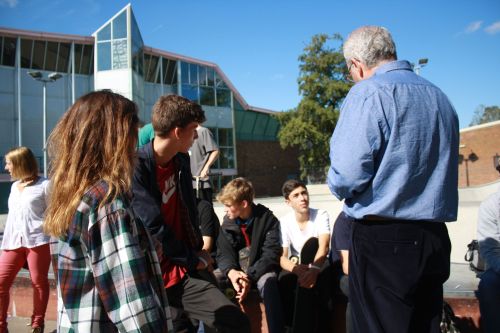
As Hampshire’s Police Commissioner, I was privileged to visit many schools, taking a particular interest in the social, emotional and mental health challenges of vulnerable children. What impressed was the commitment of teachers to address the needs of their students. What was clear however was how many young children were leaving early schooling without the ability to read or write, let alone legibly – a basic skill, without which a child is at immediate disadvantage. We know a high percentage of those in prison are unable to read or write properly.
Space doesn’t allow detailed examples, but I’d be surprised if we don’t all recognise the challenges on social workers, mental health practitioners and teachers to deliver effective support for young people. They want to – society wants them to, yet social priorities from successive governments, over decades, have not enabled them to.
The correlation is obvious. Other statutory bodies, through an inability to effectively address social problems are putting pressure on police to pick up the pieces of their failings. We have reached a time when the police can no longer perform this task.
An opportunity exists to pause, create a space and re boot a social agenda that will deliver guidance to those who need it, support for those in need, reduce anti-social behaviour, quell violence on our streets and insist statutory authorities pool budgets and work together to achieve a stronger more supportive and harmonised society. Too many futures have already been affected by failings of the present – we must see a changed approach.
Simon Hayes.
Former Police & Crime Commissioner for Hampshire and Isle of Wight
 Society Thinking - "Social Change"